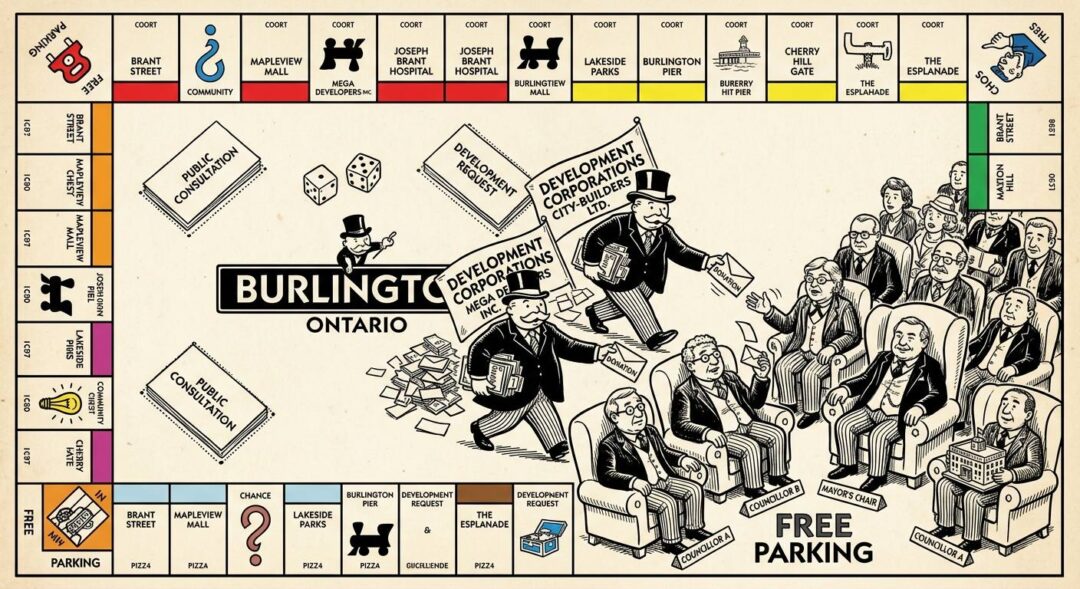
Money. Ask any aspiring municipal candidate what the biggest obstacle to running is, and the answer will likely be campaign financing. Running a competitive campaign costs money—for advertising, literature, promotional materials, and much more. While the candidate who raises the most money does not necessarily win, mounting a credible campaign almost always requires substantial financial resources.
So, how much money does it actually take to run a competitive municipal campaign?
What Does the Legislation Say?
The Municipal Elections Act, 1996 sets out the rules governing campaign financing and spending. It establishes two separate financial limits.
The first is a cap on how much a candidate and their spouse may contribute to the candidate’s own campaign. For a head-of-council candidate, the limit is $7,500 plus $0.20 per eligible elector. For council candidates, it is $5,000 plus $0.20 per eligible elector, to a maximum of $25,000.1
The second is the general campaign spending limit.
The city clerk calculates and provides each candidate with a final spending limit based on the number of eligible electors on the voters’ list. This occurs on or before September 30, 2026 (see page 22). For the 2026 election, the formula is $7,500 plus $0.85 per eligible elector for head-of-council candidates, and $5,000 plus $0.85 per eligible elector for council candidates and school board trustees.2
Insights from 2022
The legislation is informative, but actual campaign spending provides a more useful benchmark.
In the 2022 municipal election, candidates competed for six council seats and the mayor’s office. How much did the successful incumbents actually spend?
The financial statements for all candidates are available here. For this analysis, I’ve focused exclusively on the successful candidates, all of whom were re-elected comfortably, most with more than 60% of the vote.3
| Ward/Incumbent | # of Contributors | Spending Limit | Total Campaign Spending | Amount Donated by the Candidate & Spouse | Total Campaign Donations |
| 1 – Kelvin Galbraith | 25 | $21,619.20 | $23,660.91 | $270.85 | $23,020.85 |
| 2 – Lisa Kearns | 23 | $22,595.85 | $7,091.78 | $2,466.78 | $4,450.00 |
| 3 – Rory Nisan | 37 | $20,055.00 | $20,168.59 | $1,625.00 | $17,340.12 |
| 4 – Shawna Stolte | 6 | $27,501.20 | $9,658.55 | $6,410.21 | $3,200.00 |
| 5 – Paul Sharman | 22 | $27,156.10 | $21,126.09 | $300.00 | $21,650.00 |
| 6 – Andrew Bentivegna | 5 | $26,205.80 | $12,533.58 | $8,433.58 | $4,100.00 |
| Mayor – Marianne Meed Ward | 35 | $115,272.00 | $24,258.51 | $23,429.45 | $18,907.00 |
A Deeper Dive into the Numbers
Several interesting patterns emerge from the data:
- Three successful incumbents (Lisa Kearns, Shawna Stolte, and Marianne Meed Ward) spent well below their campaign spending limits.
- Three candidates (Kelvin Galbraith, Rory Nisan, and Paul Sharman) made only modest personal financial contributions to their own campaigns.
- Two candidates (Shawna Stolte and Andrew Bentivegna) attracted comparatively few contributors.
- Three incumbents (Kelvin Galbraith, Paul Sharman, and Andrew Bentivegna) received significant support from large donors contributing more than $1,000. Seventeen of Galbraith’s 25 contributors donated more than $1,000, while 16 of Sharman’s 22 contributors did the same. Four of Bentivegna’s five contributors exceeded $1,000, although they appear to have been family members. By contrast, Lisa Kearns’ donations were all under $600, while Rory Nisan’s campaign relied on a broad base of smaller donors, with only five contributions exceeding $1,000.
- Eight of Mayor Marianne Meed Ward’s contributors donated more than $1,000.
- Lisa Kearns and Shawna Stolte spent substantially less than the other successful incumbents.
General Lessons Learned
Here are several practical lessons from the 2022 election:
- Candidates should expect to make a significant personal financial contribution to their campaign, likely between $8,000 and $10,000.
- Candidates will probably need to raise an additional $10,000 to $15,000 from external supporters to mount a credible campaign, particularly if they are challenging an incumbent.
- Friends, family members, and neighbours are often an important source of campaign funding. A handful of generous supporters can significantly strengthen a candidate’s campaign.
Now, the Elephant in the Room
All of this leads to the obvious question: who are the major financial contributors to Burlington’s municipal election campaigns?
A review of the largest contributors reveals one striking pattern. Many are associated with the real estate development industry. Whether by coincidence or design, developers, their employees, and others connected to the sector are disproportionately represented among major campaign contributors.
For Councillor Kelvin Galbraith, 15 of his 25 contributors had ties to the real estate industry:
- Bruce Macdonald – First Rock Properties
- Dr. Michael Shih – Emshih Developments
- Jeffrey Paikin, Sara Defina, Jenne Wilches, Jessica Dipronio, Travis Nolan – National Homes
- Arun Anand – Infinity Developments
- Richard King, Nigel Morgan – Morgan Investments
- James Forte – Laxcon
- Vincent Molinaro – Molinaro Development
- Guenther Bluez – Vrancar Group
- Adam Peaker – LivWell
- Bill DeLuca – Aldershot Landscapers
The pattern is similar among Councillor Paul Sharman’s contributors:
- Liaquat Mian – LJM Developments
- Dr. Michael Shih – Emshih Developments
- Bernd & Karilla Abromeit – formerly associated with Navona Corporate Management
- Jo Giacoomodonato, Jeff Paikin – National Homes
- Aashna Ganatra – Real Estate Division of BMO
- John Krpan – Krpan Group
- Angelo Paletta – Paletta Developments
- Andrea & Ralf Peckart, Sean & Amy Wadsworth, and Heidi Armstrong – Branthaven Homes
- Nick Carnicelli – Carriage Gate Homes
A quick look at Mayor Marianne Meed Ward’s largest contributors revealed one particularly notable name: Mitch Goldhar. For those unfamiliar with him, he is the billionaire real estate developer who founded SmartCentres. He is also one of only four contributors on the mayor’s list who did not reside in Burlington.
Is it inappropriate for individuals to make substantial campaign contributions? Of course not. As Councillor Bentivegna’s campaign demonstrates, many of his largest donors appear to have been family members. It is entirely reasonable that they would want to support his candidacy.
Nor does a large campaign contribution automatically buy influence or favour. A contribution may simply reflect confidence in a candidate or support for their policies and priorities. In both politics and business, professional relationships often evolve into genuine friendships, and financial support may simply reflect those personal connections.
Even so, several aspects of the 2022 campaign finance data raise legitimate questions.
For example, four of Councillor Sharman’s contributors did not live in Burlington. Neither did seven of Councillor Galbraith’s. Why would individuals who do not reside in the city make campaign contributions exceeding $1,000? A modest donation might be understandable, but contributions of that size from non-residents naturally invite closer scrutiny.
A second observation emerged when I selected one contributor at random from the Ward 1 campaign filings. Jenne Wilches, an Office Manager with National Homes who lives in Brampton, made four municipal campaign contributions during the 2022 election:
- Patrick Brown (Candidate for Mayor, Brampton)
- Kelvin Galbraith (Candidate for Councillor, Burlington)
- Adrian Foster (Candidate for Mayor, Clarington)
- Zeeshan Hamid (Candidate for Mayor, Milton)
Jeff Paikin, President of National Homes, also contributed to the campaigns of both Councillors Sharman and Galbraith. The same is true of Dr. Michael Shih of Emshih Developments.
Finally, another pattern stands out. In many instances, campaign contributions do not come from a single individual connected to a development company, but from several employees or associates of the same firm. That may be entirely coincidental. Nevertheless, it raises a reasonable question: why? Does it simply reflect a shared belief in certain candidates, or is there another explanation?
Summary
Building a successful campaign requires both volunteers and financial support. If you want to see change in municipal politics, supporting candidates whose values align with your own is essential.
For the past four years, many of us—including myself—have expressed frustration with the direction of municipal politics in Burlington. But complaining, criticizing, or speaking at City Hall is not enough. Meaningful change requires action. Sometimes that means volunteering on a campaign. Sometimes it means writing a cheque.
The real estate development industry has understood the value of political engagement for years. If others want their voices to carry equal weight, they must be prepared to engage with the political process as well, rather than remaining on the sidelines.
- https://www.ontario.ca/document/2026-candidates-guide-ontario-municipal-council-and-school-board-elections/campaign ↩︎
- https://www.ontario.ca/files/2026-03/mmah-2026-candidates-guide-en-2026-03-31.pdf ↩︎
- https://navburl-burlington.opendata.arcgis.com/datasets/2022-candidate-financial-statements/explore ↩︎
Discover more from Focus Burlington
Subscribe to get the latest posts sent to your email.
An exceptionally thorough and astute analysis. Unfortunately, it was actually performed by Lynn Crosby three years ago. Some of the text is word-for-word. I would have expected an attribution at the very least.
From the author “All research conducted was done independently using original sources. That said, two people can read the same material and come to essentially the same conclusion independently.” Congratulations to Lynn Crosby for doing this research as well, and thanks to Blair for pointing this out and validating that the information in the article is accurate and worth reading.