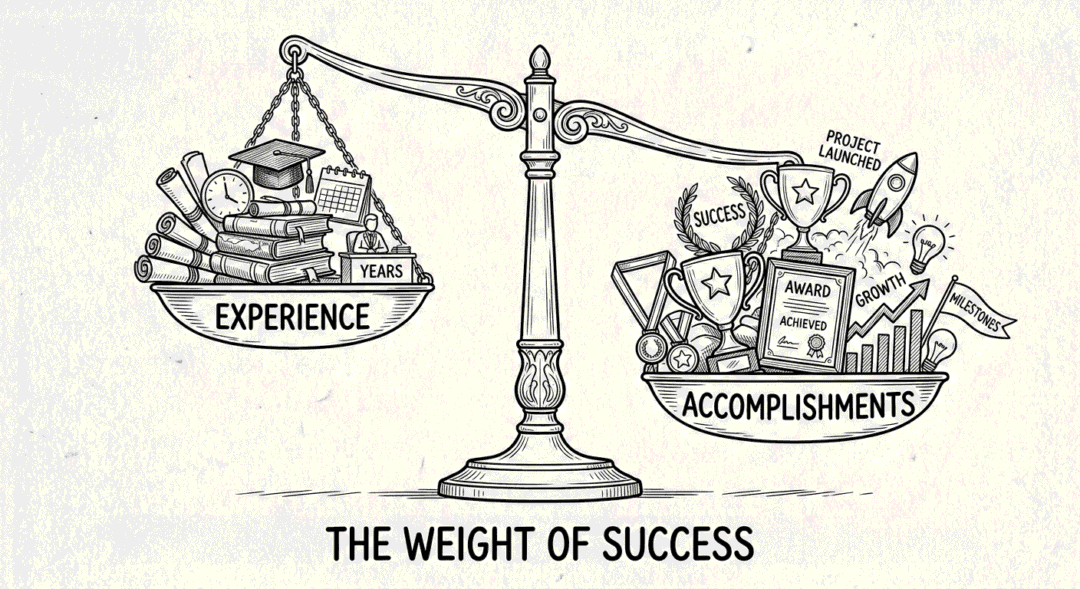
The municipal election is taking place on October 26th, 2026. We have many incumbents asking for our vote. Does experience outweigh accomplishment?
Read part 1 here: Does experience outweigh accomplishment? Part 1
What Type of Experience Qualifies a Candidate?
If I accept the argument that experience is important, that then begs the inevitable question: what type of experience qualifies someone to run for council or mayor? I submit that the following are crucial:
1) Financial Acumen
The City of Burlington’s 2026 budget is $492.9 million, comprising a $386.0 million operating budget for day-to-day services and a $106.9 million capital budget for infrastructure investments. If Burlington were a private-sector corporation, it would be substantial.
One of the biggest problems we have seen in recent years is the size of local tax increases. Compared to other jurisdictions, Burlington’s increases are well in excess of inflation. Read any of the articles on Focus Burlington’s website written by my colleague, Eric Stern, and you’ll quickly understand the scope of both the current practices and the size of the problem.
2) Ability to Prioritize
Balancing financial costs with the maintenance of public services requires difficult decisions and, inevitably, priorities.
The notion that we can “have it all”, or that we should simply accept higher-than-average tax increases without making cuts to some services, is neither tenable nor realistic. From a stagnant industrial tax base to inflationary pressures, increasing wage settlements and the replacement of existing infrastructure, all of these competing pressures require choices. Should we hold the line on municipal employee salary increases? Do we forego replacing certain buildings, and instead, opt to upgrade them? Do we cancel certain programs because they are no longer financially sustainable? Decisions, decisions…
3) Engagement Skills
Engagement means more than being able to deliver an impromptu speech. It means the ability to connect with constituents, genuinely listen to what they are saying, empathize with their needs and interests, and critically evaluate or implement their feedback.
Engagement isn’t thinking up a stock answer to a question before the constituent has even finished speaking. It isn’t holding a coffee meeting at Tim Horton’s simply to demonstrate availability. And it probably isn’t another City Hall survey with obtuse questions that fail to address the underlying issues.
4) Results Orientation
Aspirational phrases from candidates running for public office, such as “I want to make Burlington a better place to live”, are frankly superficial. If someone runs for public office, they should be able to articulate a clear vision of what that means in concrete policy terms.
5) Independent Minded
The ability to challenge conventional opinion—whether it comes from public servants, developers or pressure groups—is increasingly important to many voters.
Too often, municipal public servants operate without sufficient guardrails, limitations or a clear mandate. When Mayor Dilkens in Windsor told public servants to bring forward a municipal budget with a 0% tax increase in 2026, that reflected both realism and an independent streak. It stands in stark contrast to a directive that simply asks staff to bring in a budget.
6) Understanding of Local Governance
One doesn’t have to be a political science major to run for public office. However, it is critical that those seeking office understand the structure, roles and differences between municipal and regional government—particularly who does what.
Some preliminary research is essential. There are numerous sources, including the Association of Municipalities of Ontario and the Ontario government, that provide useful information. Even attending a council meeting or delegating can give political aspirants a basic understanding of how municipal business is conducted.
On the Flip Side
The following, I submit, probably don’t weigh as heavily in the minds of many voters as relevant experience:
1) Team Player
Getting along with others is important, but far more important is the ability to “speak truth to power” and question established structures and practices.
Someone who simply “goes along to get along” is essentially at the mercy of subject matter experts, special interests and public servants. There are times when conventional practice needs to be challenged. If being perceived as a team player is more important than speaking one’s mind, we have to ask how well that person is serving their constituents.
2) Entrepreneurship
That $500 million corporation referenced earlier, the City of Burlington, isn’t a “mom and pop” operation. It is a sophisticated enterprise with hundreds of employees, multiple departments and complex legal structures.
Someone who has spent their entire career in small business may do well serving on a local township as a part-time reeve. However, in major urban centres, this type of background doesn’t necessarily provide the depth of understanding or gravitas required to navigate complex, matrixed organizations like City Hall and regional government.
Small business offers a different managerial perspective and greater freedom of action than a large corporate structure. Generally, an entrepreneur’s understanding of conflict-of-interest guidelines, governance and how public policies are developed may not be particularly strong. Navigating municipal departments requires a combination of finesse, patience and an ability to deal with ambiguity.
3) Sports Team Involvement
Managing a sports team or recreational activity is important, but the degree of transferable skill is limited. Volunteer work may speak to civic pride, but that’s about it.
4) Long-time Residence
Speaking as a long-time resident, I don’t place much stock in this qualification anymore.
Burlington faces some real challenges in the next few years, and it will take more than nostalgia and looking to the past to solve them. One could even argue that those who have moved here from somewhere else bring new ideas and fresh perspectives.
“Same old, same old” simply won’t cut it in the future.
Conclusion
The number of incumbent politicians going down to defeat in primary contests in the U.S. is astounding. It speaks to the mounting anger and frustration of a bitter electorate that appears to be as upset with long-time Senate and Congressional incumbents as it is with the current occupant of the White House.
Whether that phenomenon will be reflected in municipal elections in Ontario this fall remains to be seen. In Toronto, contenders such as Brad Bradford and Chris Alexander are both vying to topple Mayor Olivia Chow. In Hamilton, Keenan Loomis and Rob Cooper, along with six lesser-known figures, are hoping to unseat Andrea Horwath.
When experienced candidates with name recognition and relevant experience step forward to challenge incumbents, the value of tenure is likely diminished.
Does experience trump accomplishment?
I’m guessing not.
Why? Perhaps because this year a frustrated electorate likely values change more than it values people with long tenure.
On October 26th, we’ll see if that holds true.
The coming weeks will be critical in shaping the conversation about Burlington’s future. Focus Burlington is proud to play a role in fostering informed dialogue, encouraging participation, and helping residents connect with the individuals who are stepping forward to serve.
Details for the Focus Burlington Debate
Thursday October 1st, 2026
6:30 p.m. to 9:00 p.m.
East Plains United Church
Please RSVP here – the event is free https://www.eventbrite.ca/e/burlington-mayoral-candidates-debate-tickets-1998110191370
Discover more from Focus Burlington
Subscribe to get the latest posts sent to your email.
I agree with everything in this article. Unfortunately I feel that some of those running for election in Burlington seem to fall into the category of perhaps not being qualified for the position.
I doubt if they realize just how much work is attached to the job.
How do you tell them to step away? The only thing they are going to accomplish is to split the vote.
Today, I attended a “Crime in Burlington” forum at Burlington Central Library. On the way out I started talking to a woman who was there as well. We spoke about the different levels of government. The last thing I asked her was ” do you know what ward you live in” the answer was NO.? I asked her who her councillor was ” she did not know”. Doubt she will vote.
What as a society are we doing wrong when residents have no idea of how to address issues that are affecting their lives with their elected officials when they do not even know who they are.