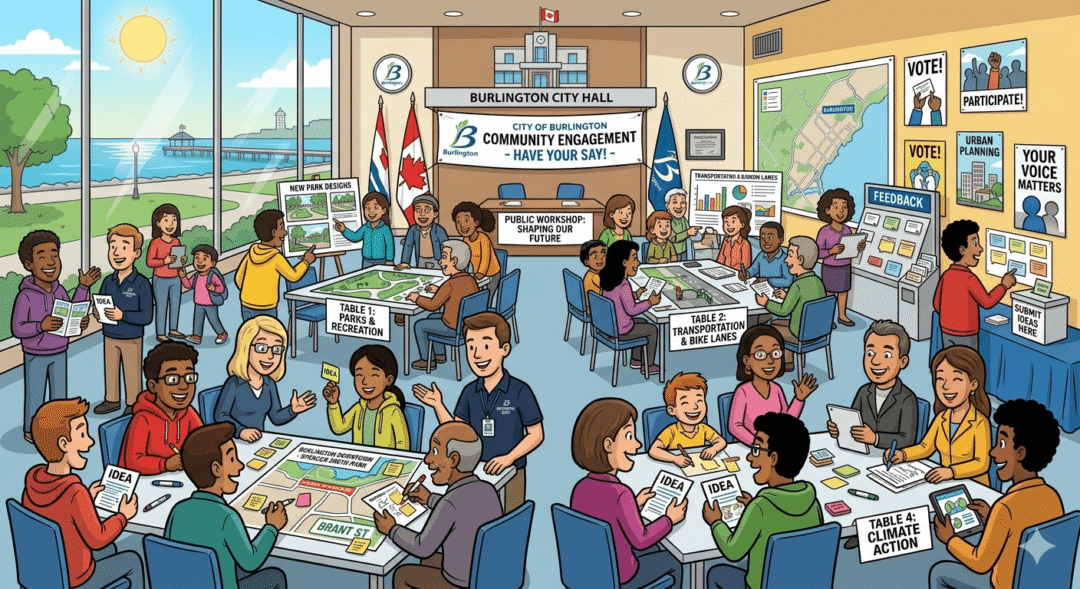
Burlington recently released its new Community Engagement Charter. First released in 2013, the charter sets out how public servants, citizens and council work together to shape public policy. According to the website, the updated charter “sets clear expectations for how the city engages with residents, focusing on early communication, open dialogue and showing how feedback is used in decision-making across the city’s initiatives, projects, and policies.”
This is all very laudable. The issue I have, which transcends the charter, has always been: What actually happens to all the feedback the City of Burlington receives? I have yet to see a situation where the city actually heeded feedback and significantly changed its policy direction.
Significant time, money, and effort go into providing feedback through multiple channels. The city’s communications department works hard to track and capture it. What is the result? When has the city actually relied on public input to shift policy direction?
At Focus Burlington, we frequently conduct surveys on everything from the budget to transportation gridlock. We post the results and use the comments to refine our own approaches. That is transparency.
Can the same be said for the city council? Jim Barnett has delegated many times on issues ranging from municipal waste to spending. The response is almost always a perfunctory “Thank you for your delegation,” followed by silence. In 2024, we submitted 15 constructive budget suggestions and received a scripted response. Not one suggestion saw the light of day. Why?
Ask residents about our municipal government, and you’ll get two extremes. The first is the “Disney Response”: everything is fine, the birds are singing, the sky is blue, and we should be grateful. But things don’t stay “great” through complacency; they improve through active refinement.
The second, more prevalent response: “Why bother? They’ll do what they want to anyway.” This sentiment explains our historically low election turnouts and sparse meeting attendance. It’s not that people don’t care—it’s that they are disillusioned by a lack of genuine impact.
ChatGPT defines “public engagement” as a process that moves beyond information sharing to foster dialogue and ensure public wisdom is reflected in the final solutions.
“Public engagement is the intentional process of involving citizens, stakeholders, and communities in decision-making, policy development, and problem-solving. It moves beyond mere information sharing to foster dialogue, incorporating public input and expertise to improve outcomes. It aims to build trust, enhance transparency, and ensure diverse perspectives shape public services, research, and governance.“
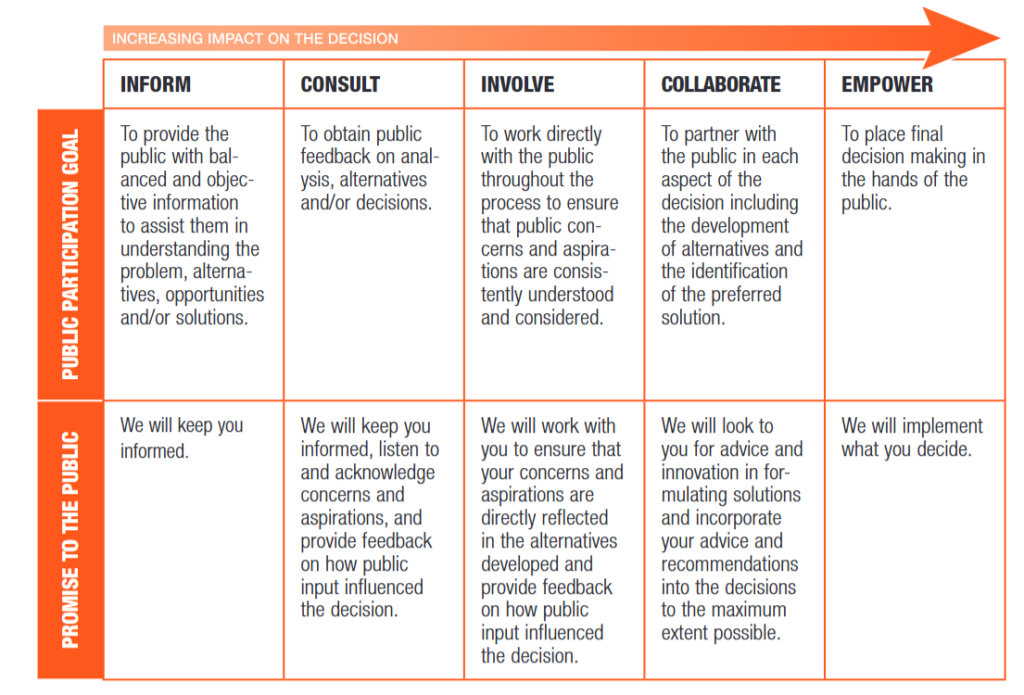
Key aspects of public engagement include: Informing, consulting, collaborating and empowering the public. Two-way communication, exchanging ideas and providing feedback from the city to residents.
The city handles the “sharing” part well. When it comes to a measurable impact, the track record is dismal. When it comes to the various boards and committees, the city controls the membership, agendas, and schedules. How independent can that feedback be? “Food for Feedback” events feel scripted and do not include a residency requirement.
I have volunteered in politics for years and worked with officials at every level. I do expect that when citizens provide feedback, they are not just heard, but occasionally heeded.
Burlington treats “engagement” as a noun and a process—a box to be checked. To connect with people, engagement must be a verb. Engaging with residents requires a willingness to act on input and an openness to change direction.
The day a resident stands before the council and a councillor recommends that staff work with them to frame a recommendation is the day we’ve moved past the abstract process toward true, functional democracy.
Discover more from Focus Burlington
Subscribe to get the latest posts sent to your email.
Isn’t it interesting when candidates run for election or re-election Public Engagement suddenly becomes an important issue.
Once the election is over things go back to the status quo. “Thank you for your delegation, I see no questions from council so you have been very thorough”. Translated this means you wasted our time, we have no intention of doing anything that you suggested”
Is it any wonder that residents don’t vote in municipal elections, let alone challenge the city by delegating. Most residents in Burlington have no idea what ward they live in or who their councillor is.
Once you are considered to be a “disrupter” there is absolutely no chance of being on a City Advisory Committee ( which is another waste of time).
Many of the residents that do vote do so by “name recognition” which in my opinion is the worst possible way to vote someone into office.