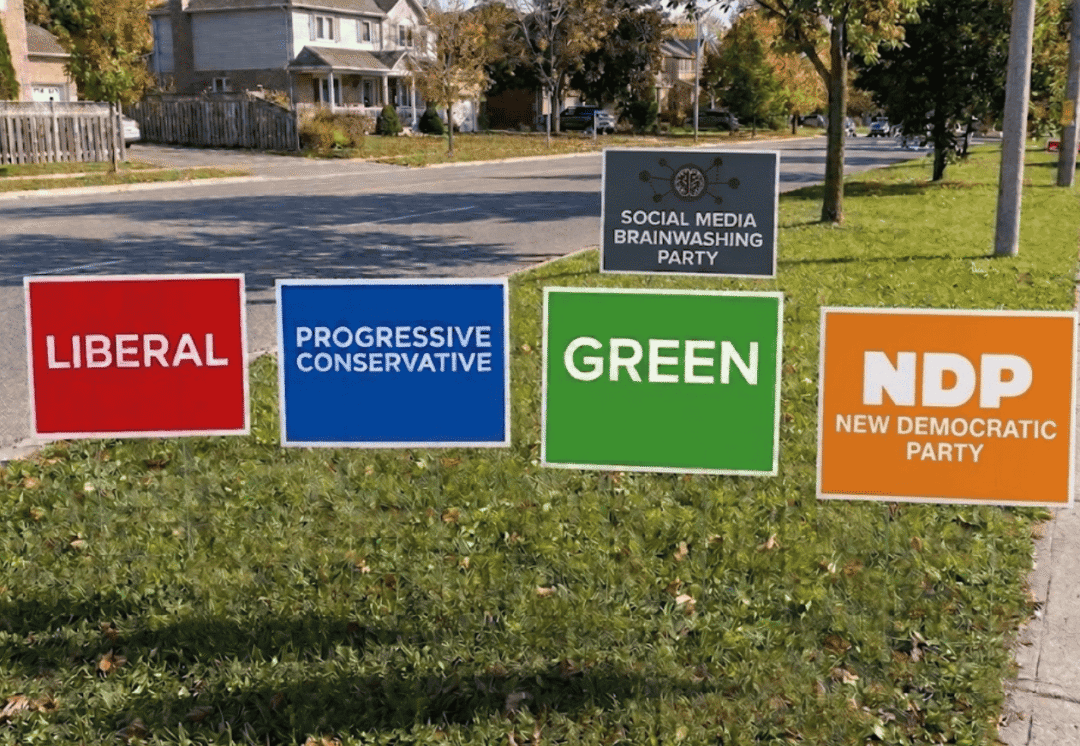
The Case for Municipal Political Parties
In a recent YouTube podcast, veteran reporter and national columnist Andrew Coyne suggested that municipal political parties might increase voter participation. His argument was straightforward: voters often know little about individual candidates or their positions, whereas political parties could offer clearly defined platforms to help electors make informed choices. (Featured starting around 8:00 minutes in and lasting to approximately 12:00 minutes):
Is there merit to this argument?
Two Different Models
Municipal political parties are well established in countries such as England, Germany and France, where national political parties also compete for seats on local councils. This model can provide policy consistency, greater accountability and a clearer understanding of candidates’ positions.
However, it also carries risks. Party discipline could discourage compromise, marginalize capable candidates without mainstream affiliations, and allow provincial or national political considerations to overshadow local concerns.
A second model involves political parties organized around municipal issues and interests, independent of provincial or federal party structures. Montreal and Vancouver provide Canadian examples.
The Montreal and Vancouver Experiences
Montreal has had municipal political parties since the 1950s. Former mayor Jean Drapeau led the city from 1960 to 1994 as a member of the Civic Party of Montreal. Subsequent administrations included the Montreal Citizens Movement and Vision Montreal. Today, Ensemble Montréal and Projet Montréal are the principal contenders, representing different political orientations, alongside smaller borough-level parties.
Vancouver’s municipal party system dates to 1938, when the Non-Partisan Association (NPA) was formed. Over time, parties such as the Coalition of Progressive Electors (COPE), TEAM, OneCity Vancouver and ABC Vancouver have competed for political influence. These organizations reflect differing approaches to fiscal policy, development, housing and other municipal priorities.
Both cities demonstrate that municipal parties can provide voters with recognizable political platforms. But do they translate into greater public participation?
Would Parties Make a Difference?
Recent voter turnout suggests that municipal parties alone may not be the answer. In the most recent elections cited here, participation was 37.07% in Montreal and 43% in Vancouver, compared with 35.5% in Burlington.
Burlington’s historical turnout figures also reveal considerable variation:
- 2000: 22.7%
- 2003: 16.5%
- 2006: 34.8%
- 2010: 37.6%
- 2014: 34.14%
- 2018: 39.79%
- 2022: 27.22%
- 2026: 35.5%
These figures do not establish whether municipal parties increase turnout. Nor is turnout the only measure of engagement. Could parties attract better-qualified candidates, improve fundraising, do a proper job of vetting candidates, create additional opportunities for public participation, and generate greater interest in municipal affairs?
Conversely, could they increase partisanship, undermine collaboration and introduce unnecessary bureaucracy into local government?
These questions deserve serious consideration.
What Does the Evidence Tell Us?
In March 2024, Alberta’s United Conservative Party government introduced Bill 20, the Municipal Affairs Statutes Amendment Act. Among its proposals was a pilot program for municipal political parties in Calgary and Edmonton. Supporters argued that parties could help voters understand candidates’ positions and provide a means of vetting candidates. Opponents, including then-Calgary mayor Jyoti Gondek, warned that parties could undermine cooperation across political lines and questioned whether the public wanted the change.
https://edmontonjournal.com/opinion/columnists/opinion-municipal-political-parties-the-good-and-bad
Ontario research offers a further perspective. A February 2023 study by University of Western Ontario professor R. Michael McGregor, published by Policy Options, examined public attitudes toward municipal political parties. Of respondents, 40.3% preferred independent candidates, 37.1% had no opinion, and just 22.6% considered municipal parties a worthwhile idea. Proposed benefits, including improved accountability and campaign fundraising, were not especially persuasive.
The findings suggest that introducing municipal parties would not necessarily address the underlying causes of public disengagement.
Searching for Options
If municipal political parties are not the answer, then what would encourage greater participation?
Boards, agencies and commissions can provide opportunities for citizens to influence policy, but often their mandates are narrow, appointments are controlled by city hall, and participation may favour established interests.
Town hall meetings offer another avenue, yet they are infrequent and can prioritize information-sharing over meaningful debate. Surveys can collect public opinion, but their passive and often anonymous format does little to build sustained community involvement.
Perhaps the challenge is not simply how candidates are organized, but how citizens are engaged between elections. More accessible opportunities for public debate, evening council meetings, meaningful consultation and direct involvement in local decision-making may be just as important as the structure of municipal politics itself.
Ultimately, there are no easy answers. But when little more than a third of eligible voters participate, a relatively small proportion of the public determines who represents the entire community. That is a troubling reality for both local democracy and the future of civic engagement.
What do you think? Could municipal political parties a viable option?
Discover more from Focus Burlington
Subscribe to get the latest posts sent to your email.
I certainly hope party recognition does not happen. I really think people just are not engaged – period. My senior friends know I went to the debates and when we met socially they wanted to know my opinions and who I was likely to vote for (we are all in the same riding). But most of them just went with the same old , same old where they have lived since they were kids. And they really know nothing about the incumbents. Except that when the candidate door knocked my friends appreciated being “known, and also their kids etc”. That’s all well and good but I was able to tell them plenty about the candidate they didn’t know. I think we need to entice younger voters – not by the candidates themselves, but by the municipality. Offer them grocery vouchers when they hand their ballots in.