
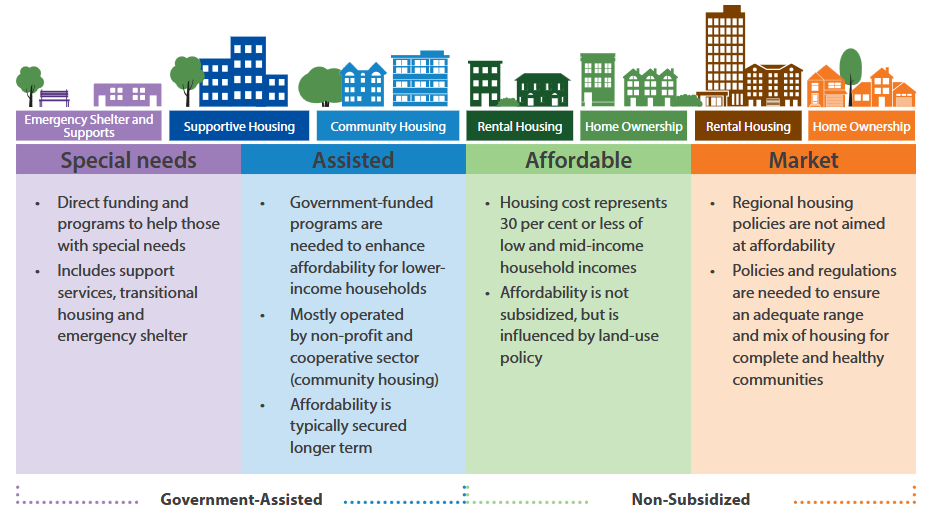
Halton Region uses the term Community Housing as the modern umbrella for what was traditionally called Social Housing.
The province has tasked Halton Region with planning, funding, and managing community housing, homelessness prevention, and other social services.
Responsibility for social housing was transferred from the federal government to the province in 1996 under the liberal government of Prime Minister Chrétien. Premier Mike Harris’s conservatives passed the responsibility down to the region in 2001. Halton continues to receive funding from both the federal and provincial governments for social housing.
Halton defines social/community housing as a range of “assisted housing” programs where the cost is subsidized by the government (Federal, Provincial, or Regional) to keep it below market rates.
Here is the breakdown of how Halton defines the different tiers of social housing within their system:
1. Rent-Geared-to-Income (RGI)
This is the “core” definition of social housing.
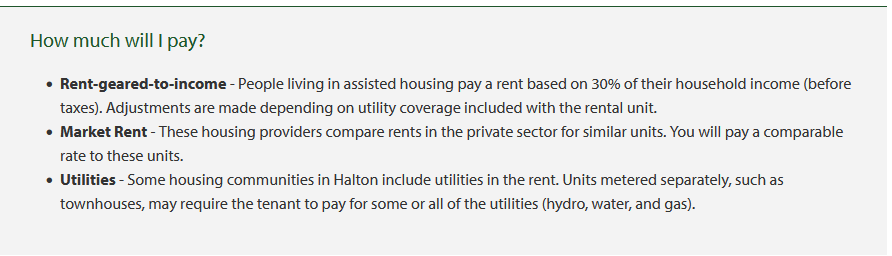
- The Rule: People living in assisted housing pay rent based on 30% of their household income (before taxes).
- The Goal: To ensure that those with the lowest incomes (often on social assistance) can still afford a stable home.
- The Waitlist: This is managed through HATCH (Halton Access to Community Housing).
2. Below Market Rent (BMR)
This is a “bridge” tier between social housing and the private market.
- The Rule: The rent is set at a fixed rate, typically 75% to 80% of the Average Market Rent (AMR) in Halton.
- The Difference: Unlike RGI, the rent doesn’t change if your income fluctuates; it is simply a discounted flat rate.
3. Supportive Housing
This is housing combined with “wrap-around” social services.
- The Definition: Social housing that includes on-site or visiting supports for seniors, people with developmental disabilities, or those struggling with mental health and addictions.
- The Focus: In 2026, Halton’s focus is on “Housing First”—getting someone into a unit first, then providing the medical or social supports they need to stay there.
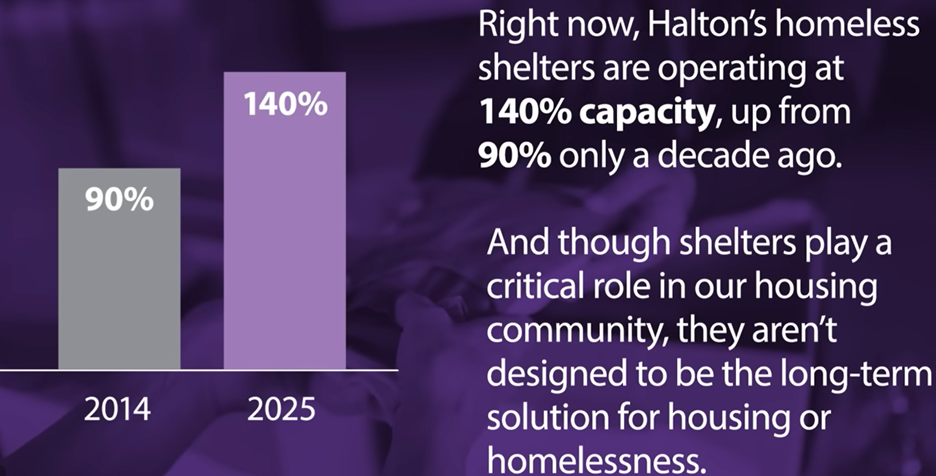
Have a look at this 6 and a half minute video from the region.
Eligibility Criteria (The “Fine Print”)
To qualify for any of Halton’s social housing programs, a household must meet these specific 2026 thresholds:
- Status: All members must have legal status in Canada (Citizen, Permanent Resident, or Refugee Claimant).
- Assets: Your total household assets cannot exceed $50,000 for a single person or $75,000 for a family of two or more.
- Independence: You must be able to live independently (with or without the help of a support agency).
- The “Clean Slate” Rule: You cannot owe money to any other social housing provider in Ontario.
Halton Community Housing Corporation (HCHC)
It is important to distinguish between the policy and the provider.
- HCHC is the “landlord” owned by the Region. They own and manage over 2,200 units across the four municipalities.
- However, “Social Housing” in Halton also includes units owned by non-profit organizations (like church groups or co-ops) that receive funding from the Region to provide RGI or BMR units.
How long is the wait list?
The “HATCH” waitlist is currently estimated at 7 to 10 years for a one-bedroom unit in Burlington.
Where does the Indwell project on Waterdown Rd. fit?
Many years ago now, the City of Burlington acquired the lots 1022-1030 Waterdown Rd. for potential intersection changes at the corner of Waterdown Rd. and Plains Rd. The buildings were torn down, leaving vacant lots.
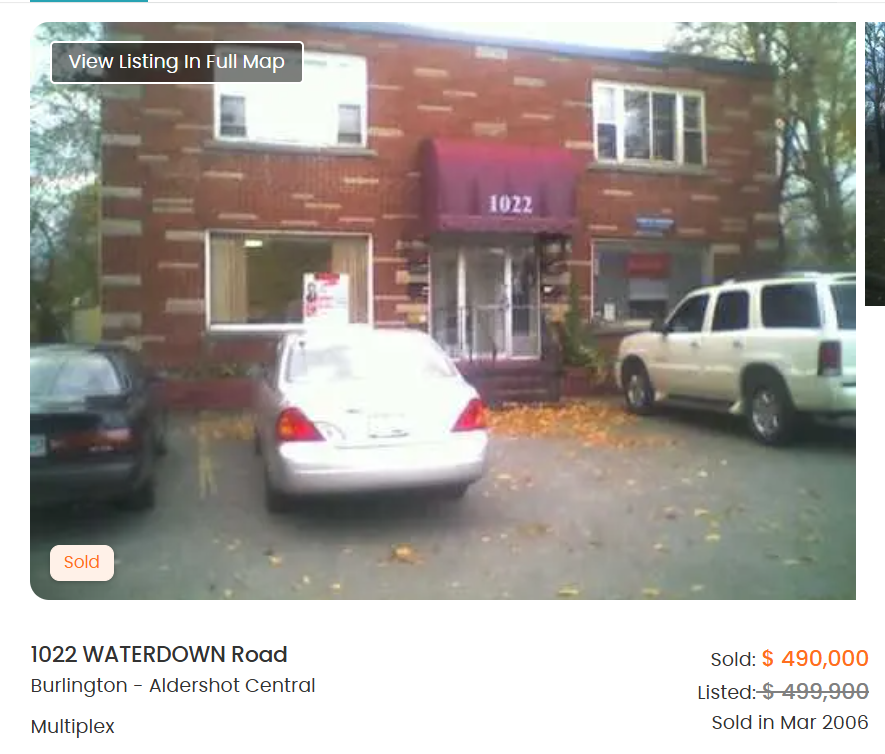
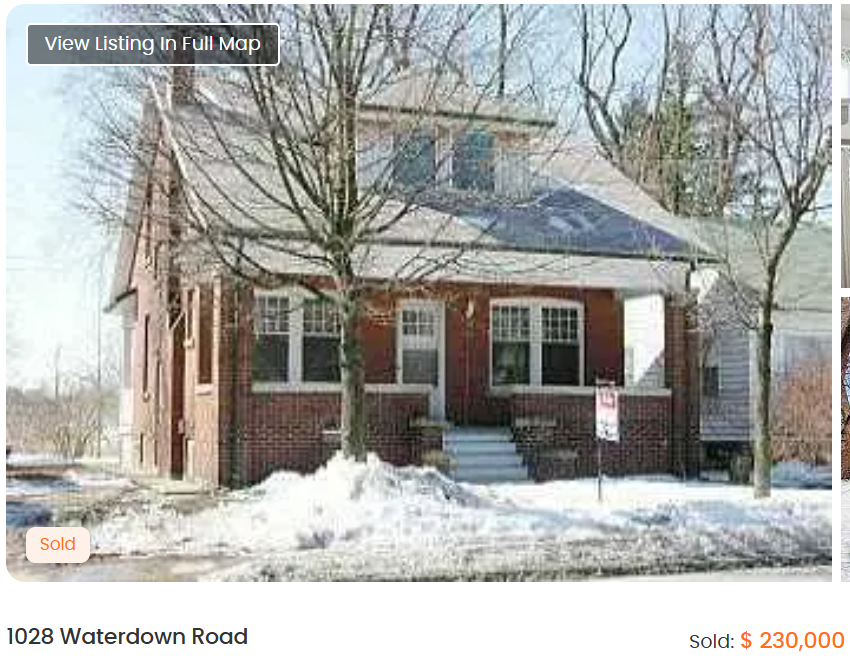
Burlington has offered to lease the properties to Indwell for social housing. The lease is for 55 years, and the cost is $5.6 million. Burlington will use funds from the federal Housing Accelerator Fund (HAF) to pay itself, making the land effectively free to Indwell for the duration of the lease.
During city council meetings in early 2026, Indwell representatives confirmed that the 74 planned units will be filled using the Halton Access to Community Housing (HATCH) waitlist. This is the same central waitlist used for all rent-geared-to-income and subsidized housing in the region. Burlington is not an island; why not help people across Halton based on need?
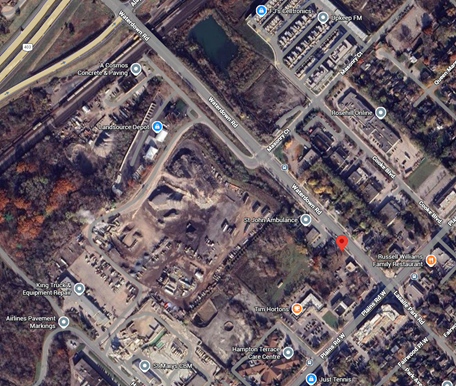
1022-1030 Waterdown Rd., Aldershot, ON, L7T 1N3
What is Burlington actually contributing?
The Federal government attached strings to the HAF funds. The city can’t simply use those funds for any purpose. By using HAF funds to pay the lease, the city effectively captures $5.6 million in revenue today; in return, the city allows Indwell to use underutilized land for 55 years. The cost to Burlington taxpayers is zero; some might argue we’re making money. There are many conditions attached to the HAF funding, and there’s a good chance Burlington may not meet all of them, resulting in the clawback of HAF funds. Not moving forward with this project increases the chances of a clawback.
Is this a win-win for the city, with a chance to help people who really need our help?
Discover more from Focus Burlington
Subscribe to get the latest posts sent to your email.